
My Grandfather

I came back to LA on Thursday and had to drive up to Palo Alto the day after (my dad wanted to go to the Family Weekend at Stanford and visit his youngest granddaughter), and I am exhausted and couldn’t work on anything. The previous 4 posts were all prepared before I left for Seoul. This is something I had written over 2 1/2 years ago when I was working on the Haeinsa post as a side story. I didn’t think I’d ever publish it because it’s a very personal thing but I’ve decided to. I don’t know… I haven’t slept any meaningful hours for about 4 days now and can’t think straight. I might even delete this post later, who knows… I will come back next Sunday with a clearer head.
I grew up in a small municipality called Geochang (거창) in South Kyongsang Province (경상남도). In the mid 1970s, the roads going into the town were still mostly unpaved, TVs were scarce, phone numbers (for those who had it) were 3 digits long.
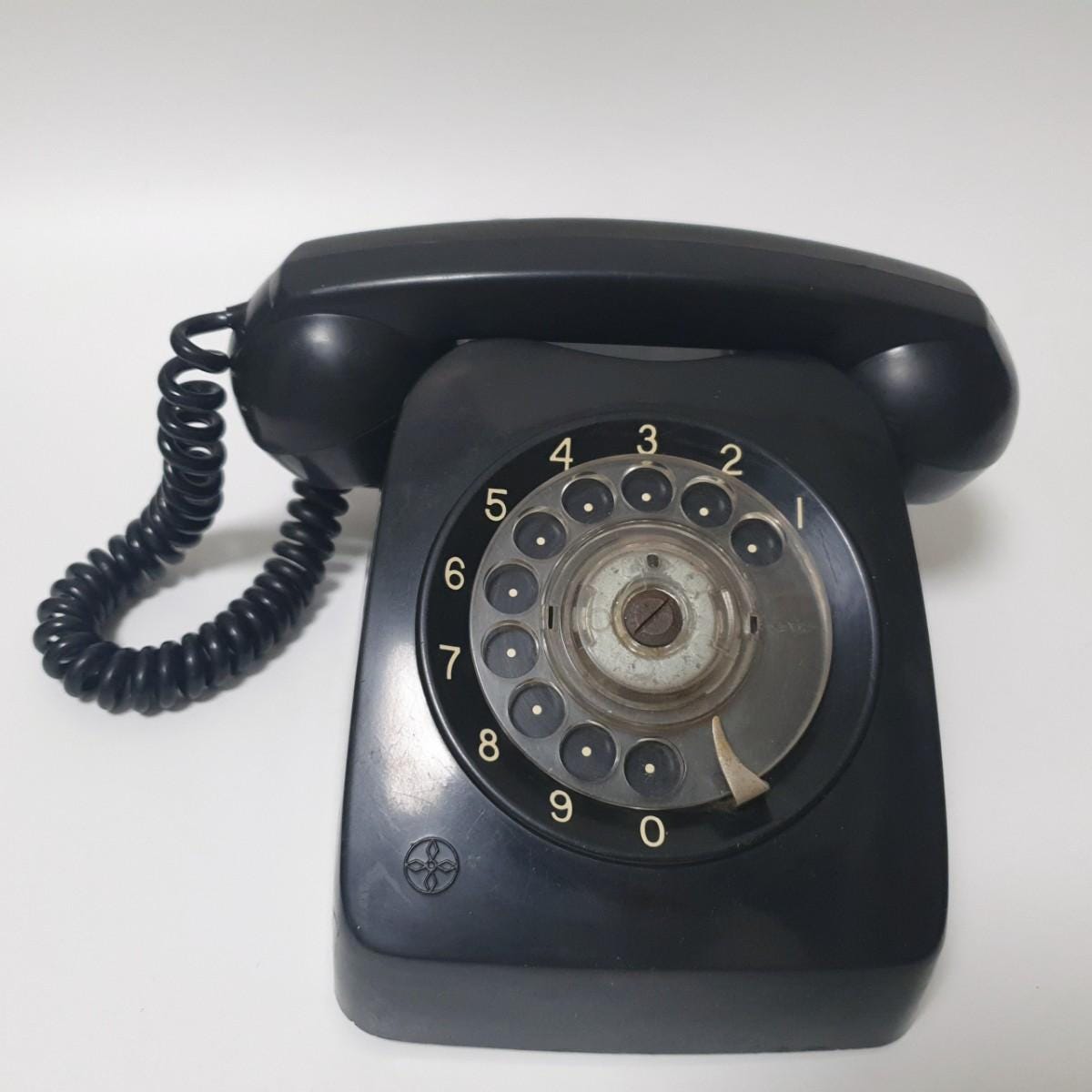
Fortunately for me, my grandfather was a man of some influence in town, so our family was able to have things that most others didn’t, like a small color(!) TV, a rotary phone, and an ok-sized home that could house about 8 to 10 people. But there was no indoor plumbing, so we still had to use the outhouse for our daily duties.
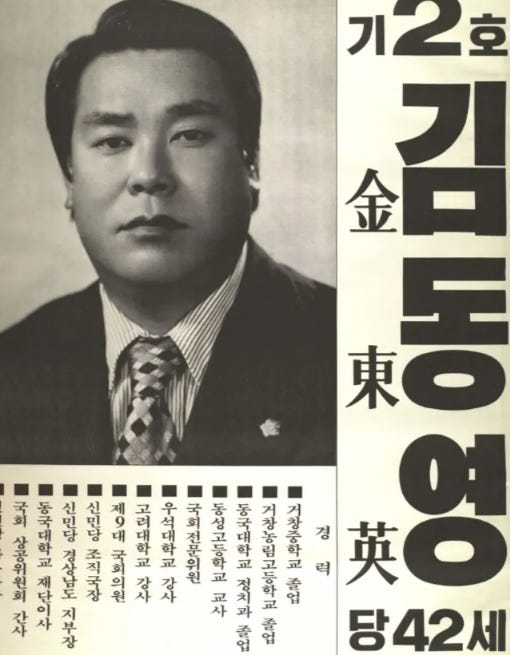
How I found out that my grandfather was an influential person was when I saw men like Kim Dong-young (above, born and raised in Geochang), a four-time National Assemblyman and later Minister of Special Activities under President Roh Tae-woo and other aspiring politicians, would visit my grandfather with gifts whenever there was an election coming up. And teachers at the school I attended all knew who my grandfather was.
My grandfather was a very, very stingy man. He used to portion out 3 squares of toilet paper (or sometimes crumpled old newspapers) for the number 2’s for every member of the household. If anyone was caught using more, there was a hell to pay. And he ignored social rules. He used to cut in line all the time, but when others would do equally unseemly things, he would openly and loudly chew them out like there was no tomorrow.
My grandfather was the scariest man I ever knew. He never drank or smoked in his life, and never, ever, used physical force in dealing with anyone, but he was absolutely terrifying, not only to me but to everyone else as well.
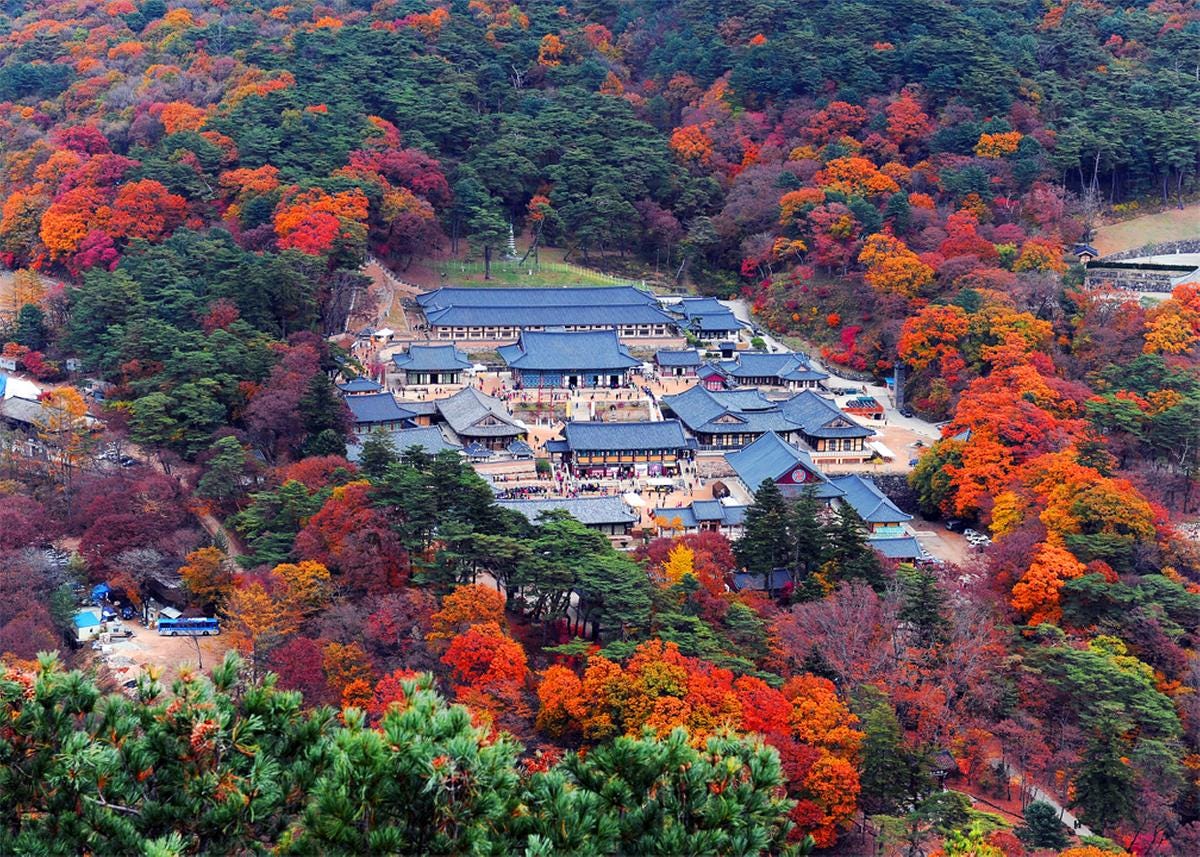
But in the most inexplicable way, he used to take me, ONLY me, not my younger brother, nor any of his other grandsons or granddaughters, to a very famous Buddhist temple (Haeinsa, 해인사) when I was 8~12 years old. I vaguely remember the bus ride through the dirt road, about an hour away, and I also remember the bibimbap restaurant we would always go to near the temple.
Knowing him, he’s the type of person who would order just 1 bibimbap between the two of us (I was still a child, you know) and split it. But he was always in a generous mood whenever we were there—he would order one for each of us. As a 10-year-old kid growing up in a remote town surrounded by mountains, a completely vegan bibimbap is not something you look forward to, but I think I was just happy that I was able to get my own.
Fast forward about 38~40 years.
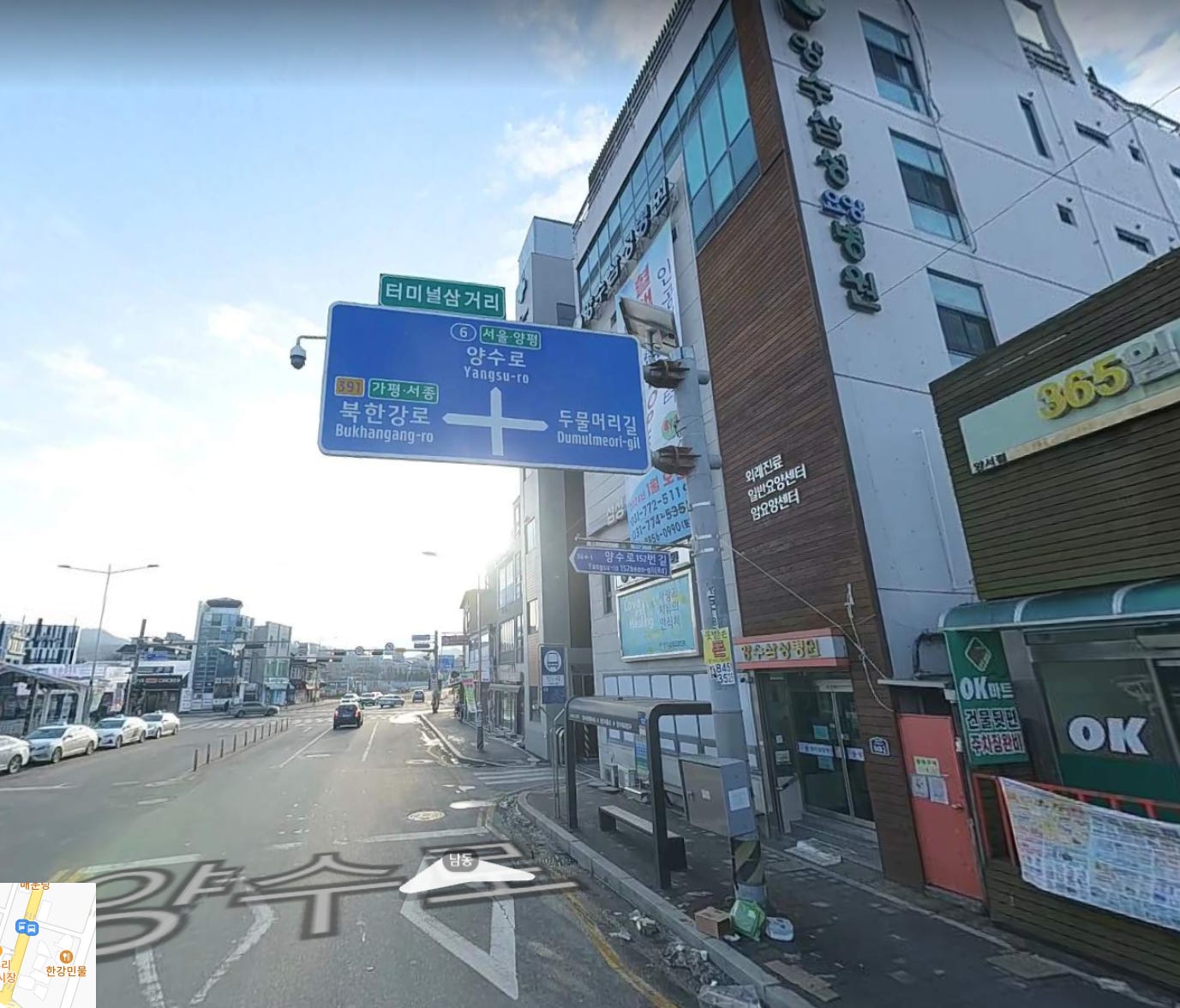
I had some business in Seoul in the winter of 2017 and was told by my parents to visit my granddad who laid motionless and unable to speak at a senior facility about an hour away from Seoul. I begrudgingly agreed to go the day before I was scheduled to come back to the US. I knew it was going to be a perfunctory visit—I couldn’t forgive and forget how badly he mistreated his wife of almost 70 years, my grandmother who was so loving her entire life, during her last days here in Los Angeles. I was shocked and flabbergasted at his insensitivity—he almost seemed happy that she had passed.1
When my kids were being born, my grandparents were staying with us in LA—around 2004 to 2006. Yes, for a couple of years, we had 4 generations of Changs living under the same roof. But he never, and I mean never, held his great grandkids in his arms. In fact, he never really looked at them. Then, I remembered my grandmother once telling me that he didn’t even hold his own sons and daughters in his arms either, nor did he ever play or spend any time with them. What can you really expect from a man like that, my grandma had said. Luckily, my dad, the oldest son, is the complete opposite. The difference could not possibly be any starker.
Anyway, I was oblivious to the thick and gloomy air when I entered the hospice building in 두물머리. This is going to be an in-and-out operation, 10 minutes tops, I thought to myself. As I was searching for his room, I remember thinking, “he doesn’t even recognize his own sons and daughters. Why did I even bother coming here?” You see, this convalescent hospital was at a remote location where a bus came every 90 minutes—and I had missed one by 5 minutes. I had to kill 85 minutes doing absolutely nothing and was in an irritable mood.
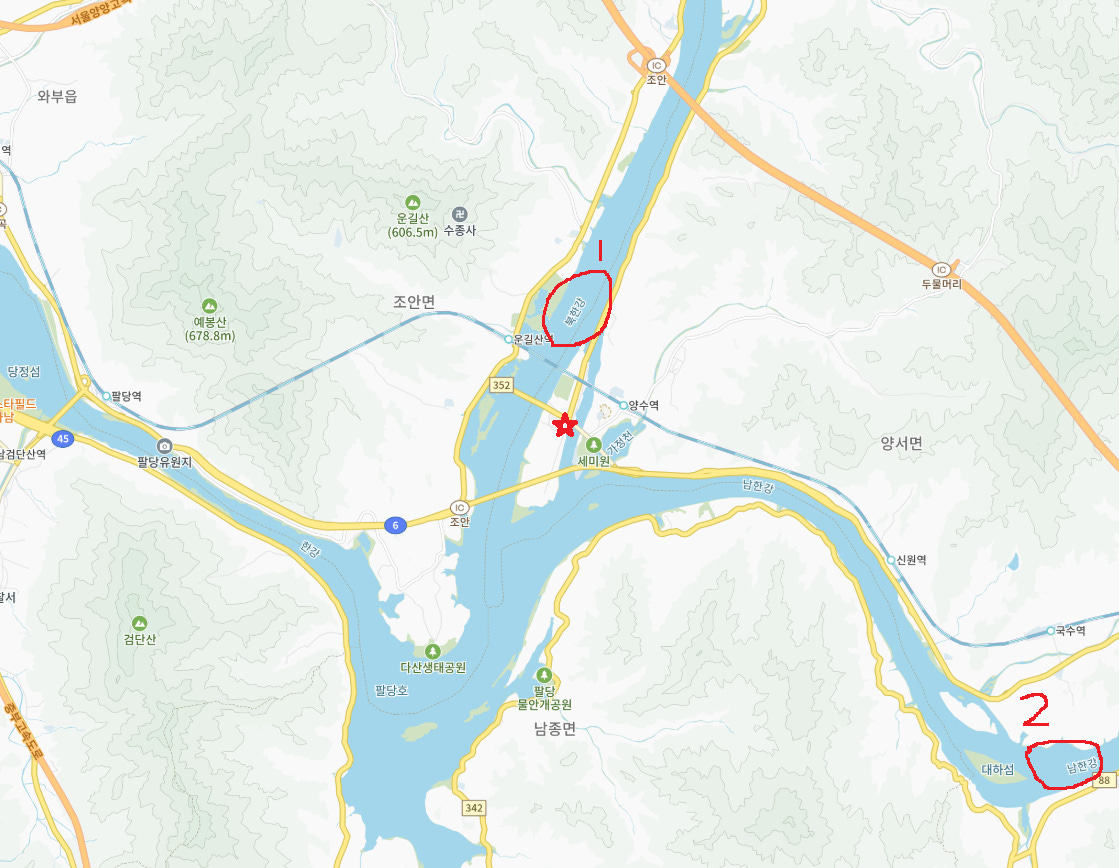
But when I finally found his room and locked eyes with him, and saw him looking at me like he’s seen a ghost, that self-administered indifference was gone in an instant. I could see that he immediately knew who I was and that momentary confused look of what is my grandson in LA doing here? Then, I saw him welling up in tears—him, the scariest man I ever knew, in tears. He was trying so hard to say something but couldn’t. He could barely move his hand, as if to try to grab mine but couldn’t. So, I did. I held his hand, something that was unthinkable for all my life.
I cried so much that day—me, the 10-minute perfunctory in-and-out operation guy. Even in the returning bus back to Seoul. People must have thought, what the hell’s the matter with him? I was so spent that day that I barely had the energy to pack up to leave Seoul early next morning.
He passed away three days after my visit. He was 103. The funeral was held in Korea but his remains are buried here in LA, next to his wife of 70 years.
I still don’t know why (actually, I think I know why now) he used to take only me to Haeinsa and buy me that bibimbap, but because of it, Haeinsa will always be THE temple for me, and the memory of it has become one of the most endearing things.
What he exactly did and said—I cannot write about and I cannot ever forget.
It’s a personal memory that I am glad you shared. Please don’t delete it!
What an authentic and sensitive remembrance. It makes me remember the last time (and maybe the first time) I hugged my father with deep affection before he passed away. And my mom, who passed away at 103, was so far away and because it was during Covid I could not go to visit her by plane. I am suddenly recollecting a few more end of life stories that I have myself experienced, and as Sandi has commented, I will carry them with me forever. I also carry a few of my father's and grandfather's gruffer moments in my heart memory. 다시 한번, 당신이 관심을 갖는 것들에 대해 글을 써주셔서 감사합니다.