
Only in Korea, part 2

Whenever I deal with a topic like this, I’m reminded that there are things that are so natural to me that I sometimes forget they would be foreign to a lot of people. Then again, I get reminded that I’m also an outsider every time I visit Seoul because there are always new things and they change so quickly over there.
Subway Screen Doors
Seoul isn’t the only city with an advanced subway—I should say “metro railway”—system. “Metro railway” because parts of the intra-city rails are above ground while most of them are underground. But for convenience, I’ll go with “subway.”

But Seoul’s system has got something that no other major subway system does. It goes mostly unnoticed but one YouTuber1 cites it as one of the main reasons why the Seoul metro system is the best in the world. (I learned a lot from this person.)
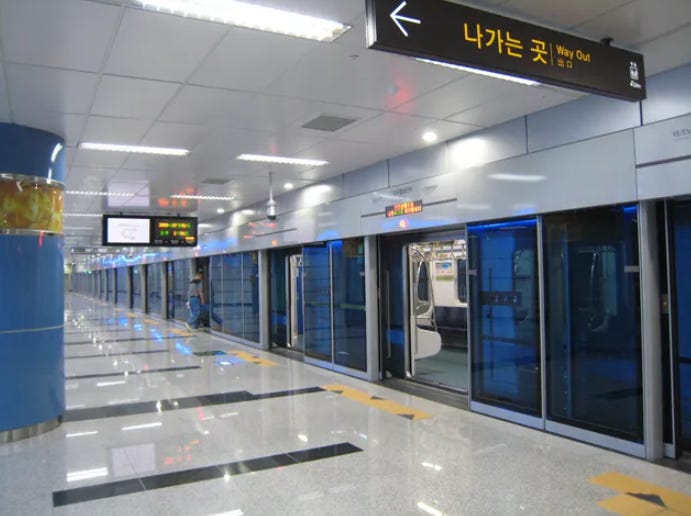
Screen doors are installed in every single metro station in and around Seoul. It may not look like much but this saves lives—you cannot fall on to the track.2 Compare this with…

Not only is this a safety guardrail, but it also blocks harmful railroad debris called particulates from coming on to the platform (and possibly into people’s lungs) and helps the stations be energy efficient as well—saving well over $10 million USD per year in cooling and heating costs.
“Not Just Bikes” is this YouTuber’s name and you might want to check out this video (I’ve marked it at 3:45. Watch until 8:20 for what makes the Seoul system better than others) if you want to learn more about why he thinks the Seoul Metro System might be the world’s best.
Eyeglasses
(Okay, this isn’t only in Korea but…) All three of my kids required eyeglasses since they were around 9~10 years old—broke my heart. You know the drill—a visit to an optometrist, get a prescription, take 2 hours to choose a frame, “your daughter needs special lens that’s going to cost extra,” pay $100+ out-of-pocket costs on top of the insurance coverage, order glasses, wait 2 weeks plus, and go pick them up.
Well, what if I were to tell you that you can truncate all of these steps into one single 20-minute visit (not including the frame picking time) to any local eyeglasses store in Seoul? And all this at about 1/3 to 1/4 the cost, without any insurance.
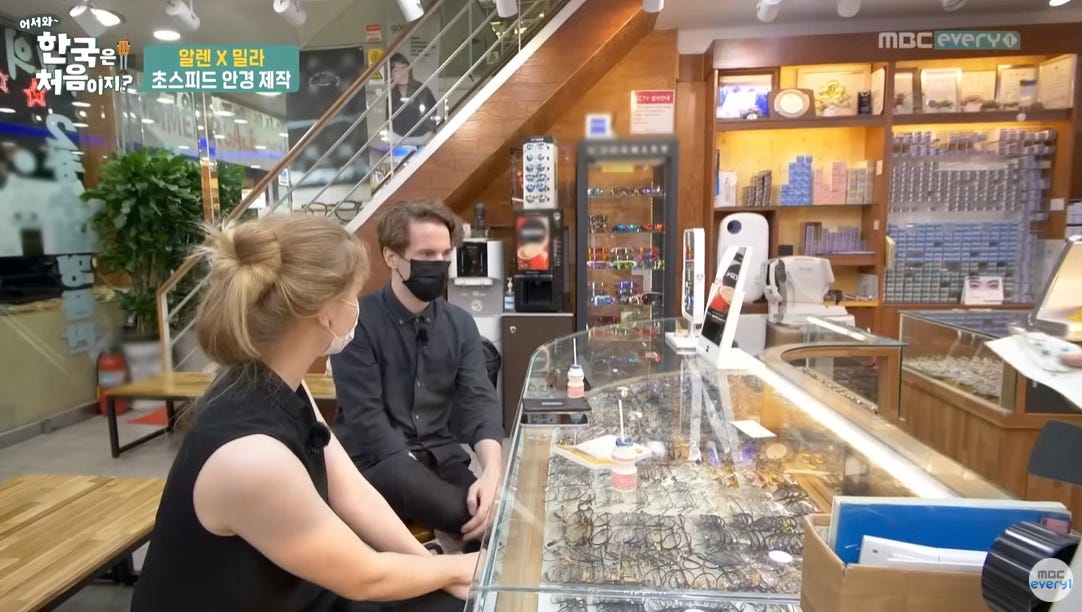

In one of the TV programs, the above Finn couple had their stopwatch out to hold the technician responsible for saying that their glasses will be ready in 10 minutes (after the exam, of course). It came out in 5 minutes and 29 seconds.
In Korea, you don’t need an optometrist’s signed prescription for glasses. A licensed technician will use the same equipment that optometrists use (in US) to measure your eyesight in about 5~10 minutes and recommend what needs to be done. Then, after the frame and lens are chosen, it takes about 10 minutes (or less) for your glasses to be put together and get fitted. Right then and there.

December 2023, the four of us were in Seoul and my three kids all got their new glasses at a local store—for about $45 each. That’s including everything and the “special” lens (= scratch resistant, blue light blocking, high index, ultralight). Fast forward 20 months and 2 of my kids needed new glasses (although they usually wear contacts). Neither had the time nor wanted to go through the usual route of having to make multiple visits and waiting for 3 weeks. So, what do they do? Call dad.
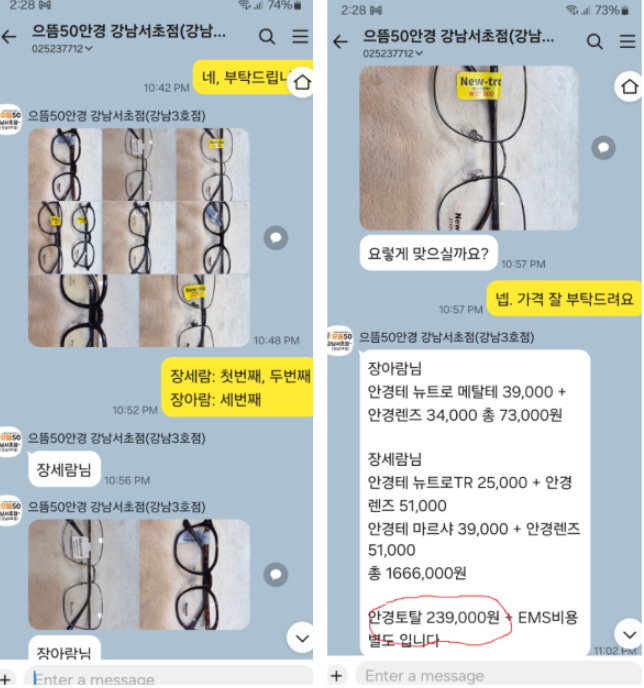
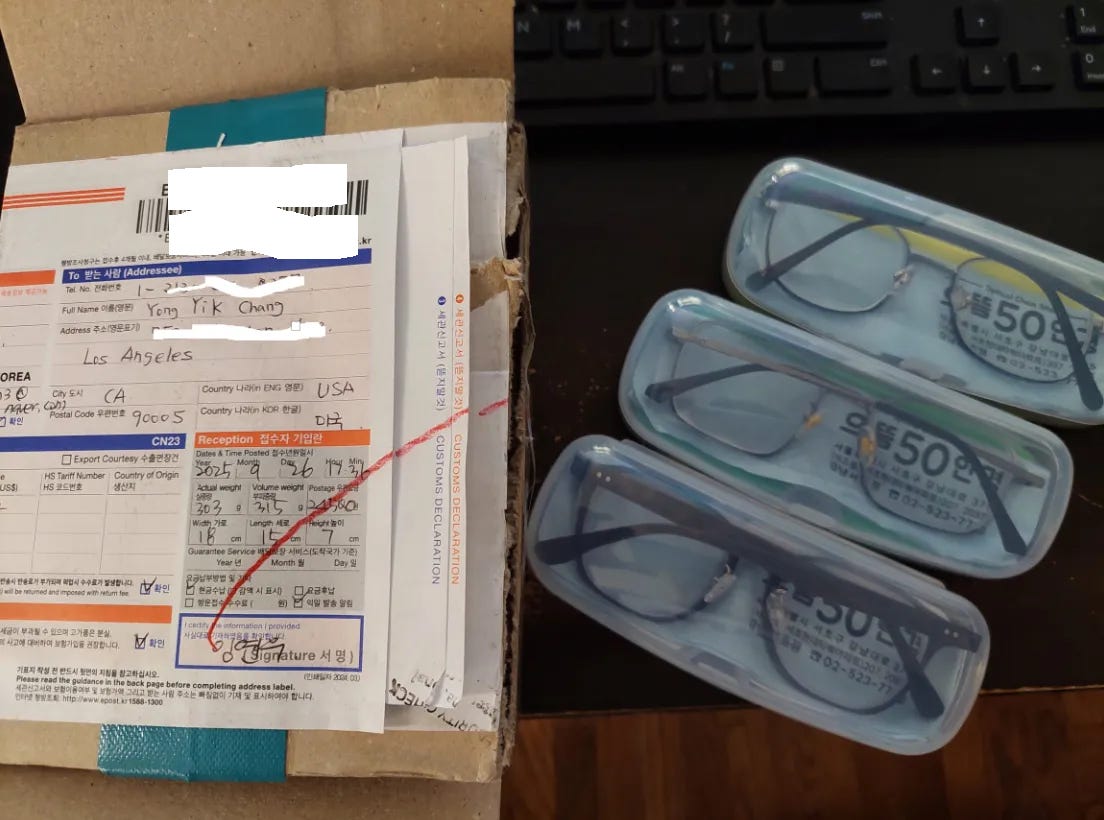
Because that shop near Gangnam subway station already had my kids’ prescription records, the technician there and I exchanged a few messages and three brand new glasses were shipped on the same day. I got them 4 days later, which were subsequently sent to Palo Alto and Chicago—the whole thing took about 7 business days. At about $55 each—had to get a little more expensive frames because they were out of the frames that I wanted.
University Majors
Living in California and having gone through the admission application process three times at multiple University of California campuses, you learn about UC Davis’s top-rated Viticulture and Enology major (45~50 miles from Napa and Sonoma, all about grape growing and winemaking) and UC Irvine’s Game Design and Interactive Media major. Those just sound cool.
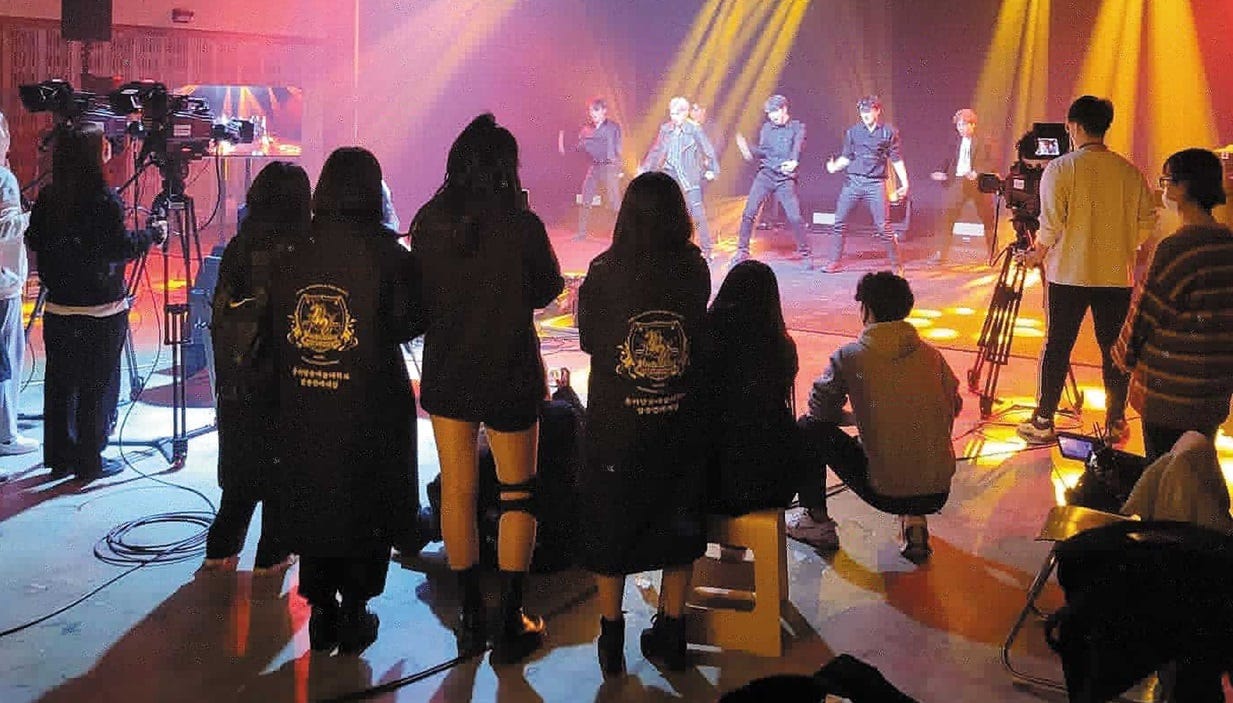
a). How would you like to major in Kpop as a university degree? Sounds fun, doesn’t it? There are 15 universities that offer this program to those who want to train as Kpop artists or get into related fields after graduation.

Honestly though, I haven’t heard of most of these universities until recently. I’ve looked them up and they really are fully accredited, real universities with real campuses, real majors and real students.
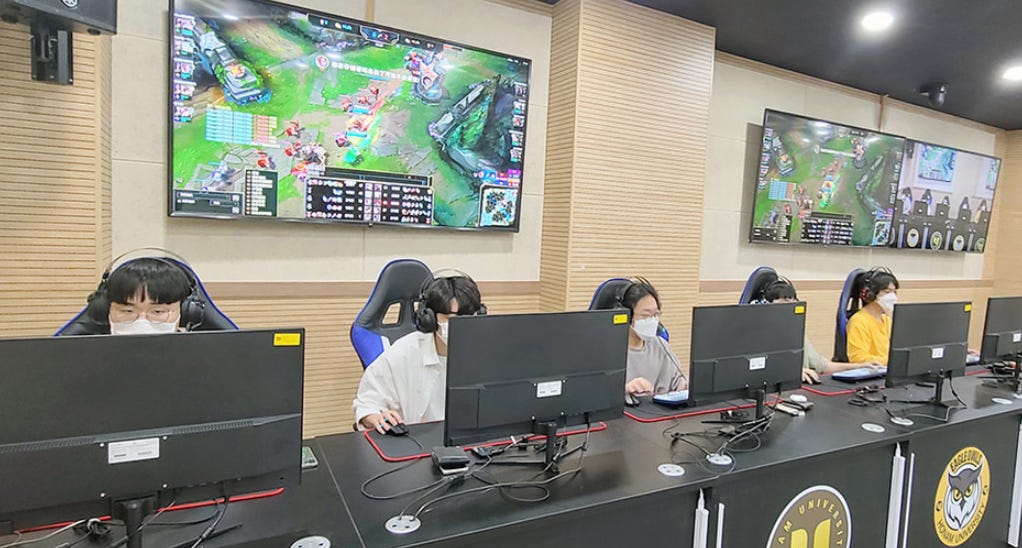
b). If you like playing computer games, then E-Sports major is something you might be interested in. Three universities offer this program for the aspiring professional e-sports gamers, coaches, marketers, and other related positions. Can you imagine taking classes to hone your space alien killing skills?
c). Wonkwang Digital University (원광디지털대학교) offers something I’d never heard of or imagined to be a university degree—physiognomy.

I’ve alluded to the Korean brand of fortunetelling a few times before and how it freaks me out from time to time. An offshoot of this practice is, in layman’s terms, “face reading.”
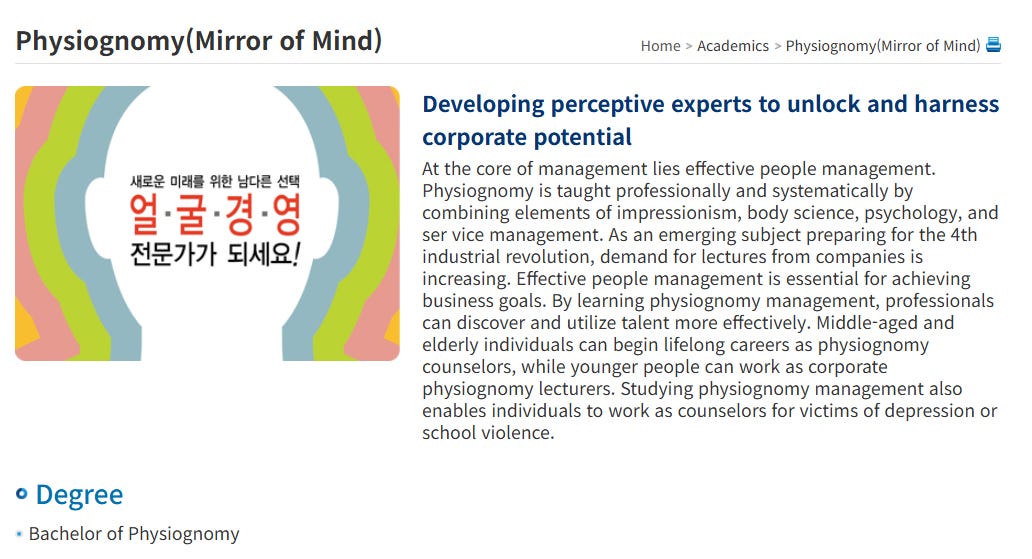
It may sound ridiculous to a lot of you, but the proponents of this practice claim that this is the original “big data” analysis, developed more than 5,000 years ago in China and refined over the years in China and Korea. Think about it. If you consider the billions upon billions of facial features as “raw data” or “variables,” and the condition/outcome of their lives as “results,” then it isn’t so crazy to draw patterns from it. In principle, your brain’s pattern recognition and “deep learning” using “big data” isn’t all that different from what the machines are doing these days—just on a much slower pace.
So, based on that belief, this major seeks to train people how to not only read faces, but also how to manage them, improve them, and even change3 them.

d). Or, how about Chunnam (Jeonnam) Techno University (전남과학대학교)’s Science of Kimchi Fermentation major? Their homepage was down when I’m writing this so I couldn’t get more information from their website, but here is their YouTube introduction.
I guess they take a scientific approach in understanding the fermentation process and developing (natural) methods for optimum flavor of kimchi for all occasions. They boast 92% of their students getting hired after graduation.
Pizza Toppings
There are two types of people when it comes to pizza toppings—those who hate pineapple and those who don’t mind it. Don’t @ me, you pizza purists, I like the Hawaiian pizza with bacon and pineapple. What I can’t stand is the pepperoni. But my hands-down favorite is the margherita—tomato sauce, mozzarella, and basil.
If you want to talk about an eclectic choice of pizza toppings, you’ve come to the right place. Let me show you just a few—from Domino’s Pizza Korea. Yeah, that Domino’s.

This one is called “Lobster Black Tiger Toowoomba with Sweet Potato Cream filled Crust.”
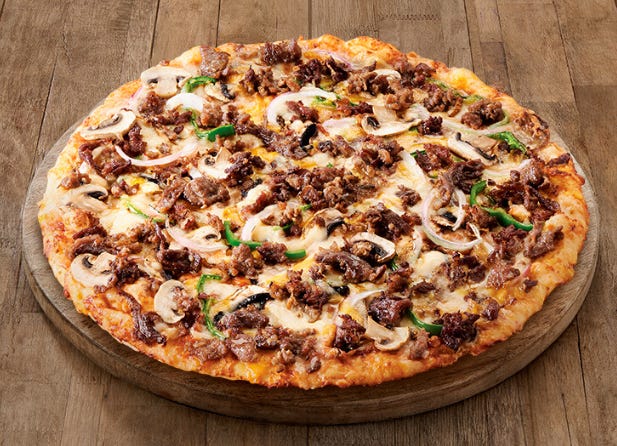
This has been around for quite a while now and is still going strong. “Real Bulgogi” pizza. There is a more premium version in “K-rib (galbi) + Cheese” pizza.
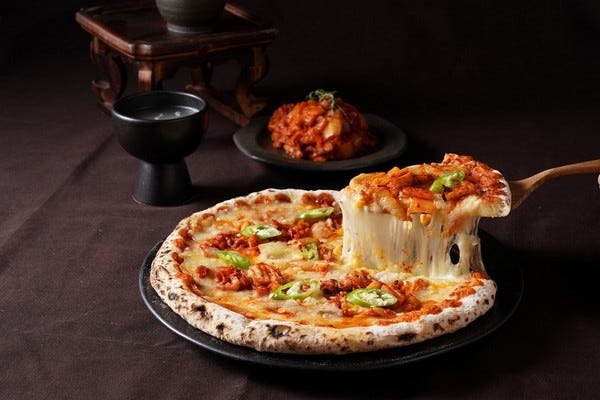
I think this was very short-lived, but a few Korean pizza franchises used to market kimchi pizza. I’ve never tried it and I don’t ever want to, but before you laugh it off, the latest fad is kimchi pizza with sweet and sour pork (김치피자탕수육, or 김피탕 for short). Again, I don’t think I want to try it but the restaurant that came up with the recipe is apparently doing very well.

After-Birth Care Centers (산후조리원)
About 20 years ago, this was considered the domain of rich people’s privileged lives. Not any longer. You see, Koreans have traditionally had a very particular way of taking care of mothers who had just given birth. For example, mothers were to be kept warm at all times for at least 3 weeks—even during hot summer months. No air conditioning. Sweat? That’s fine. No household chores—especially washing dishes because you may have to dip your hands in cold water, even for a few seconds.
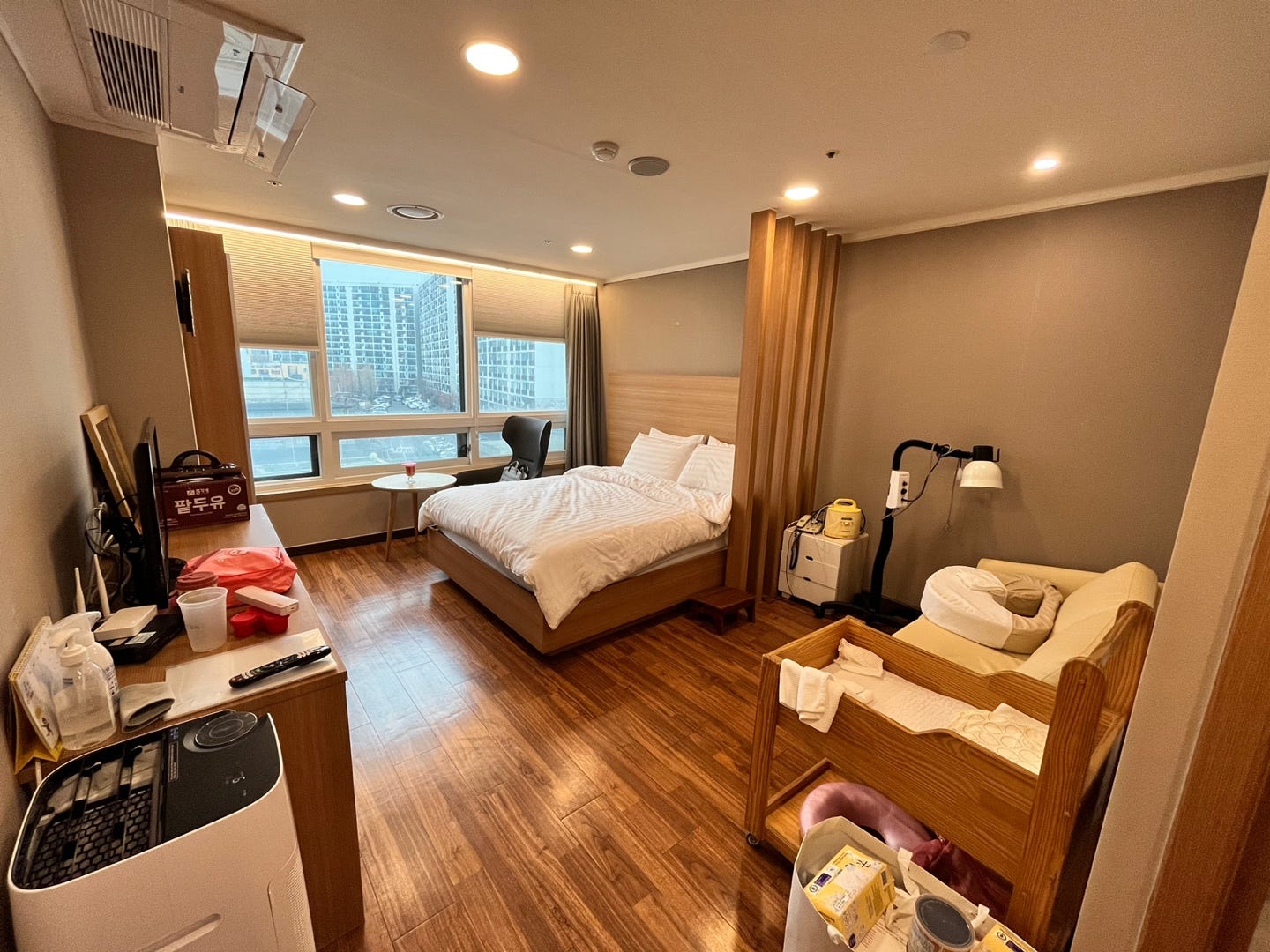
So, these aftercare centers—part medical clinic, part hotel—started popping up around wealthy neighborhoods about 20~25 years ago, and now they’re everywhere. I recently came across an article saying that about 80% of all new mothers opt for these care centers for about 3 to 4 weeks. These are in Los Angeles and New York too.
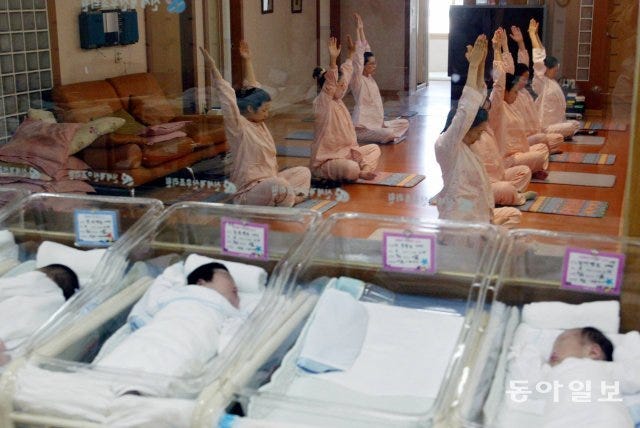
It’s not just about being pampered. You train with the most experienced nurses how to look after the infants, from breastfeeding, giving them baths, how to change diapers, and so on. They also take care of the babies overnight so moms can sleep.
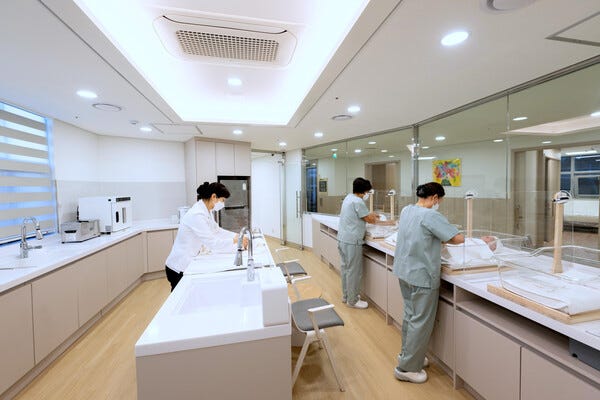
Do you think this is a little too much? There is a bit of noise coming out from that part of the world about the overall cost, how it divides people further into the haves and the have-nots, but this is one of those things that has become a part of the national culture. Especially with such a low birth rate the country has had in the past 2 decades or so.
(p.s. Let’s go Dodgers!!! 3-peat next year!!!)
I think he’s a city planner/architect from the Netherlands.
Issue of some importance because of a lot of drinking late at night and high suicide rate in the country.
I’ve heard countless times from these so-called experts that yes, your birth face can be changed. One of the big reasons why so many Koreans opt for plastic surgeries.
Where is your hometown? I'm not going near any tripe!!! Daegu used to have the best fried rice in Korea (before the plague of coffee shops ruined everything). I also remember buying fresh chicken from small markets, and having them cook it right there.
In Daegu, I used to get glasses at a shop in Jisan-dong. I was amazed how cheap a good pair of glasses cost !!! I also liked to look at the really expensive frames that were for sale. Gold rimmed ones cost almost a thousand dollars!!!